

Summary
Refurbishing a truck’s service body can significantly extend its usable lifespan, often for about a quarter of the cost of a new replacement. This can also reduce lifetime costs for an operator while improving their efficiency by allowing them to maintain a familiar layout. Custom metal fabricators such as Core Fabrication in Calgary perform refurbishments by carefully assessing each operator’s needs and drafting plans using 3D models. An in house team then handles fabrication, paint and transplantation onto the chassis.
Service Body Conversion: Transforming Decks into Utility Style Builds
A good service body may not need to be replaced as often as you think. Refurbishment can add years of usable life to the service body you already have at a fraction of what a new one costs.
Core Fabrication is Calgary’s leading fabricator for custom truck service bodies. Read on to learn what happens when our team performs a service body conversion, how much money it can save you and who can benefit most from this process.
Core Components for Reliable Service Bodies
A standard flat deck is built around the concept of open carrying capacity. It typically consists of:
- A strong deck surface
- Tiedown options
- Enough room to load material, equipment or pallets
This kind of platform is useful when your day changes constantly or when you haul oversized loads that do not fit inside compartments.
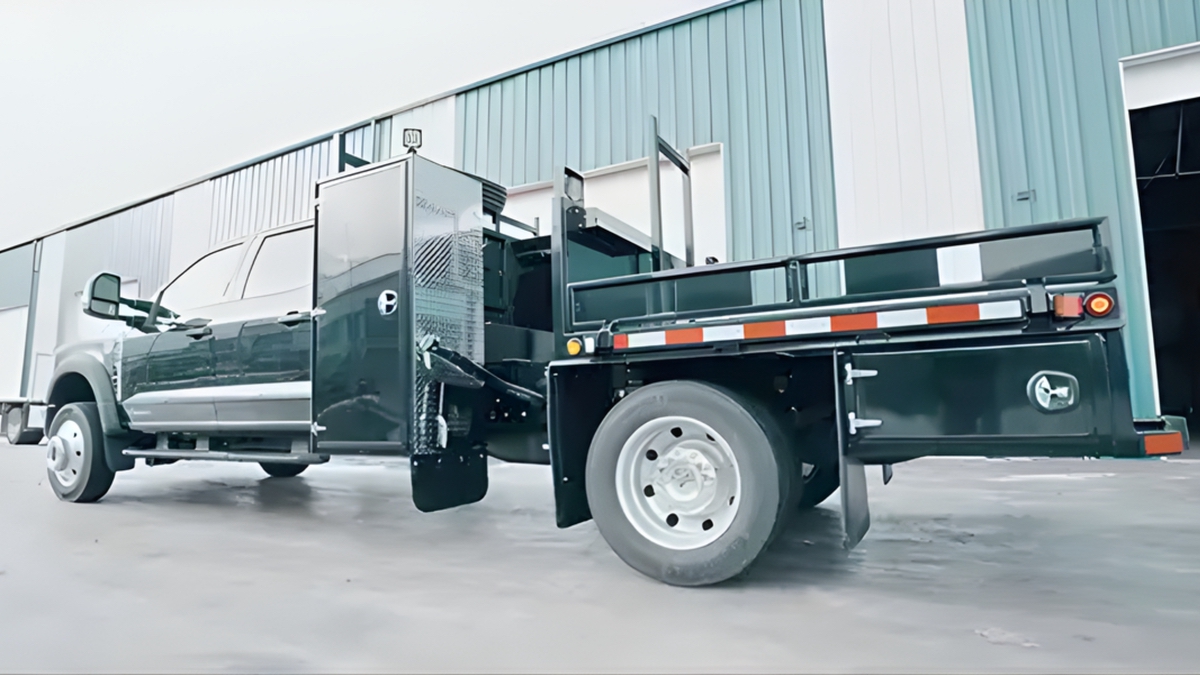
A service body is different. It is a custom layout engineered to facilitate efficient access to specific tools and materials.
Instead of an open deck, a reliable service body must include integrated storage and work zones configured for specific tasks. Core Fabrication’s utility-style builds typically include:
- Side compartments for tools, parts and consumables
- Rollout trays that bring heavy items to you so you don’t have to climb in or reach for them
- Top racks for ladders, pipe, conduit or long stock
- Work lighting and strobe lighting for dark sites and roadside safety
Learn More: 11 Essential Roofing Truck Enhancements We Add to Every Build
Key Benefits of Service Bodies
In practical terms, a service body trades some open deck flexibility for:
- Better organization
- Faster workflows
- A cleaner and more professional field setup
When Service Body Refurbishment Makes Sense
Service bodies can last for a long time. This is especially true if they are properly maintained and regularly modified to keep up with changing jobsite requirements.
Many of the operators who contact us to work on their truck’s service bodies have one of the following problems:
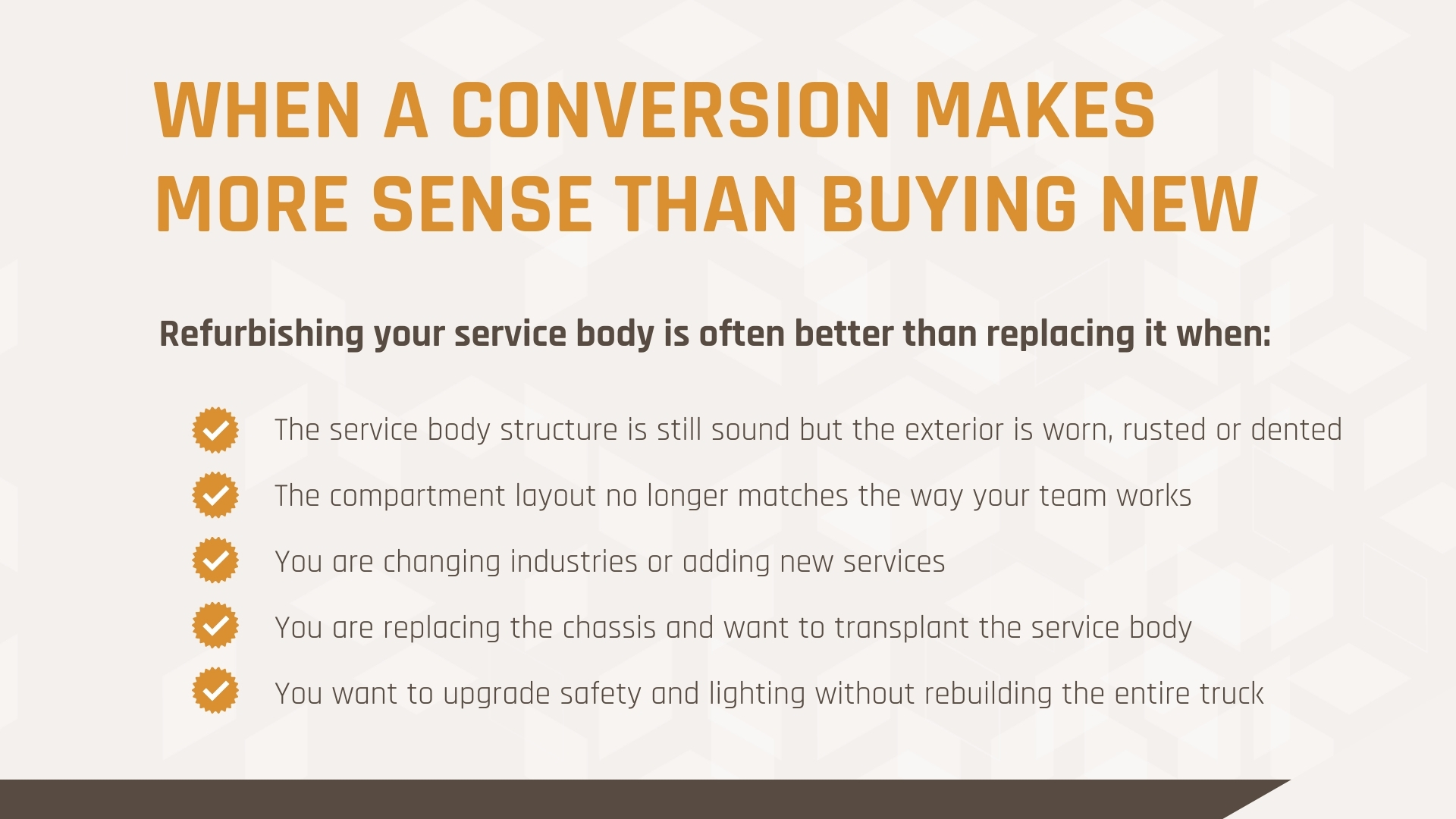
- Their current service body is still in reliable condition but the layout no longer fits their operational needs
- The service body has experienced wear and tear from years of field use and requires welding or repainting
In some cases, the operator is also purchasing a new chassis and wants to know if their current service body can be transplanted from the old truck onto the new one.
The Costs of Refurbishment vs. Replacement
In all of the scenarios described above, refurbishment makes good economic sense. New service bodies frequently cost between $40,000 and $60,000. The cost of reworking and repainting an existing service body is often closer to a quarter of that amount.
Refurbishment also brings down the total lifetime cost of a service body and improves operational efficiency. Skilled metal fabricators can extend the usable life of a service body by 10 years or more in some cases. Here is some quick math to illustrate the difference in value this provides:
Let us assume that a new service body costs $40,000 for the purposes of this example and lasts for 20 years. We will also assume that an existing service body can be refurbished for $10,000 to give it an extra 10 years of usable life.
If you replace instead of refurbishing, you’ll pay $80,000 over the course of a 30 year career.
If you refurbish instead, you’ll spend $50,000 over the same time period.
You’ll also be more efficient during the latter portion of your career since you’ll be able to spend those years using equipment you already know and trust instead of having to adapt to a new layout.
Disclaimer: These are broad estimates for example purposes. Actual costs will vary by body condition, configuration and chassis requirements.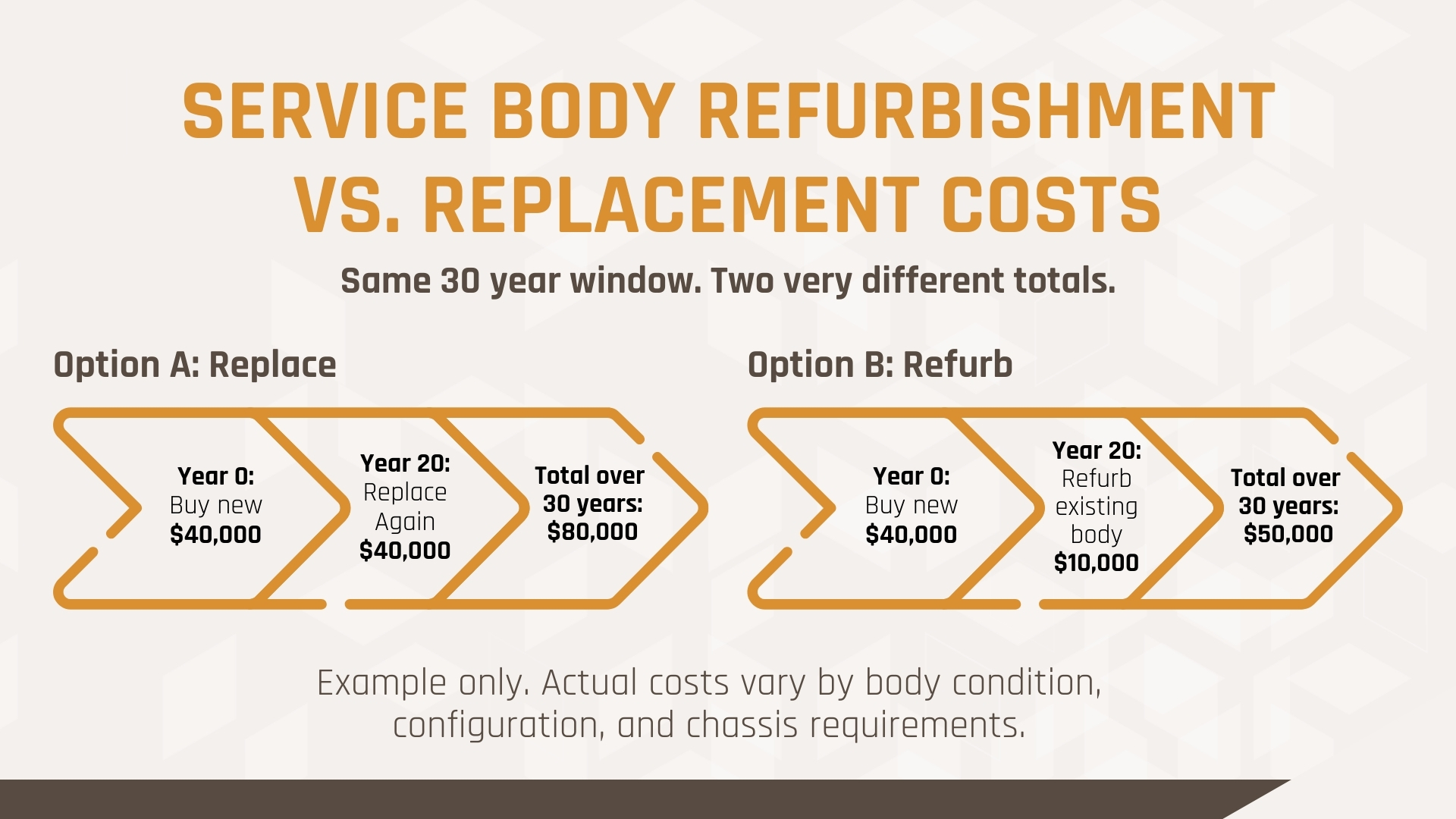
Core Fabrication’s Service Body Conversion Process
Every service body conversion starts with what your truck already has. Some existing service bodies can be kept largely intact while adding targeted upgrades. Others need more extensive reworking that may involve altering the layout.
Here are the steps we typically take during the process:
1) Initial Assessment and Project Scoping
We start by ensuring alignment on what your existing service body needs.
That usually includes:
- Reviewing the current service body condition (including structure, corrosion points, door fitment and mounting areas)
- Confirming your chassis details or fleet requirements if applicable
- Identifying what must stay the same versus what needs to change for your workflow
- Setting a realistic scope for refurbishment based on how the truck is actually used
2) Drafting and Engineering Review
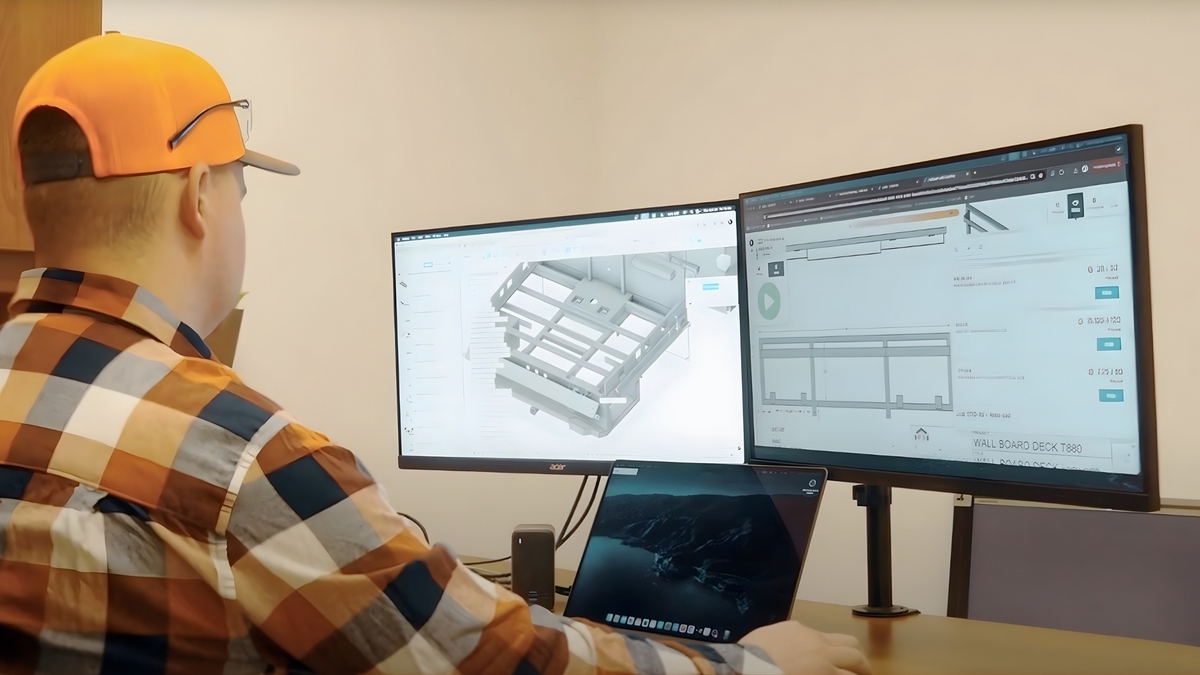
Once the scope is set, our drafting team builds a detailed 3D plan so nothing is left to guesswork. This stage is where we confirm:
- Mounting approach and interface points for your chassis
- Weight placement and distribution so the truck carries properly
- Clearances and access to ensure that doors, compartments and equipment zones function as intended
- Any compliance standards that impact how the body must be rebuilt and mounted
You always get a clear picture of what the finished conversion will look like before fabrication starts.
3) In House Fabrication and Rebuild
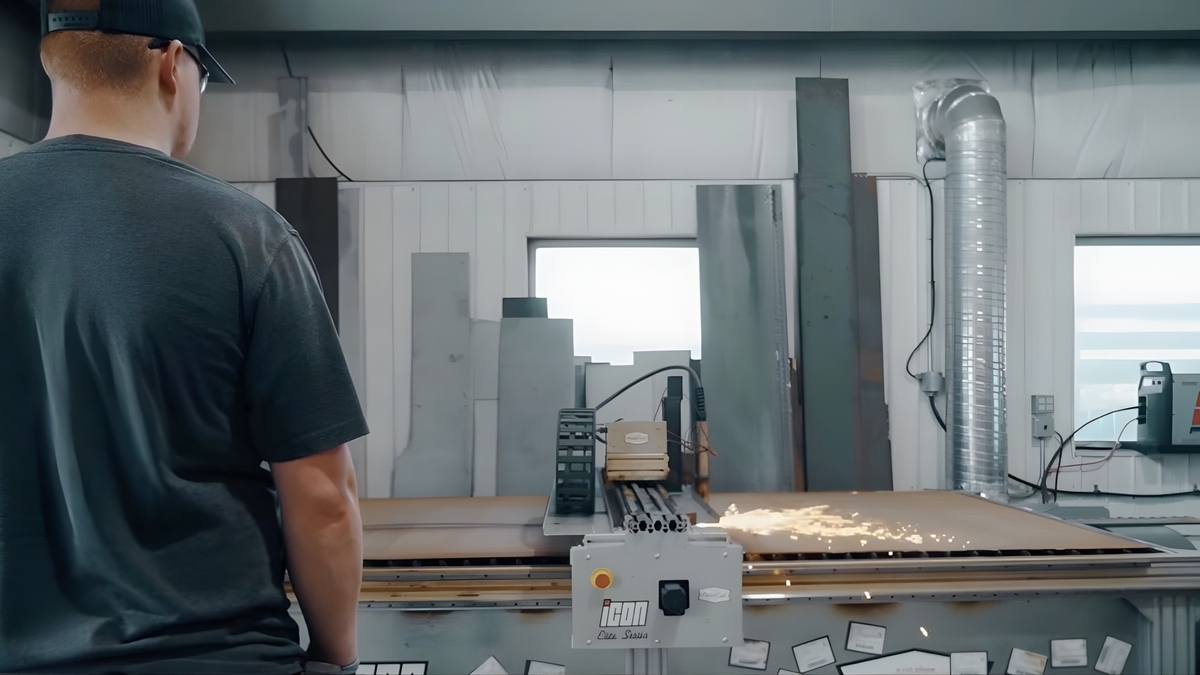
Once the design is approved, our team moves into fabrication. Depending on the job, this can include:
- Removing and prepping the body for repairs and refinishing
- Structural correction, reinforcement and repair where needed
- Reworking mounting points for the new chassis
- Completing surface prep, paint and finishing so the body is protected for long term use
All fabrication is handled in house by CWB certified welders and Red Seal journeymen, which keeps quality control tight and turnaround predictable.
4) Final Inspection and Delivery
Before you take possession of the build, we check and verify the complete system based on industry and jobsite requirements.
That includes:
- Weighing the build to confirm it matches the original plan
- Inspecting fit, finish and mounting integrity
- Confirming the unit is road ready and aligned with CMVSS requirements
The goal is simple: you leave with a service body conversion that is ready for work.
Custom Layouts by Trade
Operators in different industries have distinct needs for their service bodies. Layouts often differ depending on:
- The equipment a crew carries
- The environments where their jobsites are located
- The operational tasks they perform on a regular basis
Below are several common conversion scenarios we see for clients across North America:
Oilfield Service Trucks
Oilfield trucks take a beating over years of work in demanding conditions. They are constantly exposed to wear and tear from:
- Gravel
- Mud
- Winter salt
- Wind, snow and rain
This means seals eventually fail and rust spreads in the seams. A conversion in this scenario is often about bringing the body back to a solid baseline. We repair what is worn and refinish it properly to make it dependable again for hard field use.
Mechanic Service Trucks
Mechanic trucks tend to evolve as your tools and workflows change. Over time, the original layout may stop fitting the way you actually work day to day. Common reasons include:
- New tools and diagnostic gear
- More parts and consumables to carry
- Different job types than when the body was first built
- New techs who need a clearer setup
When this happens, a conversion is often less about fixing damage and more about updating functionality. We rework the layout so tools are easier to access and storage makes sense again. This equips the truck to support efficient workflows.
Chassis Swap and Transplant
Sometimes the service body is still worth keeping but the chassis has reached the end of its useful life.
A conversion in this scenario is often about resetting the body for the next stage of service. We refurbish and refinish it, then transplant it onto the new chassis with a mounting solution that is planned properly and ready for real work.
Get More Years Out of the Service Body You Already Own
If your service body is structurally sound, replacing it just because it is worn or outdated is often the expensive option.
A conversion can get you:
- A cleaner and more organized layout that fits your work
- Better access that reduces strain and saves time
- Upgraded lighting and safety systems for real jobsites
- A refurbished finish that holds up in demanding conditions
- A path to transplant your body to a new chassis instead of starting over
If you are considering a refurb, repaint or full service body conversion, reach out to Core Fabrication and request a quote for your project. We will review what you have, talk through what you need and put together a plan that makes the most of the equipment you already paid for.