

Summary
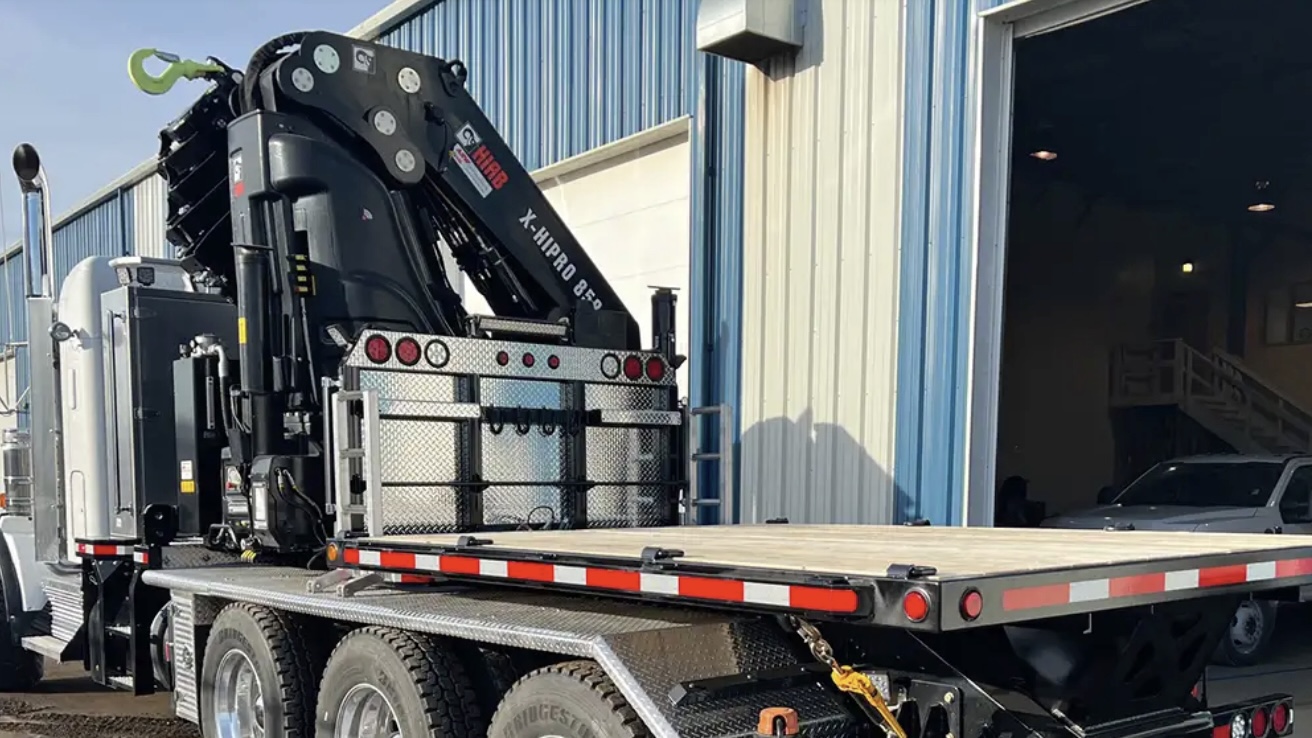
Picker trucks in Alberta oilfields face demanding jobsite conditions. Deck builds for these units must be designed with materials capable of resisting the elements. Storage compartments and electrical wiring must be sealed against water ingress and rated for cold weather. Added safety features must reduce the risk of slipping and falling during operations. Custom fabrication is often the most efficient way to achieve these goals. Core Fabrication also preengineers crane mounting points to ensure safe installations by third parties.
| Time to Read |
|
| What You’ll Learn |
|
| Next Steps |
|
Picker trucks serve as mobile workstations in Alberta’s oilfield sector. They transport equipment, lift heavy components and provide tool storage in locations where larger cranes cannot access the jobsite. These trucks operate year round in some of the most demanding environmental conditions in North America.
Building a picker unit that performs reliably in Alberta requires more than mounting a crane to a flatbed deck. The deck structure must resist corrosion from road treatments and chemical exposure. It must flex without cracking under load. It must prevent water ingress that can freeze and damage components. It must also provide safe working surfaces when ice and mud are present.
Core Fabrication designs and fabricates custom picker truck decks with these operational demands in mind. Here is how we engineer these trucks to meet the specific challenges of year round Alberta site work.
Environmental Demands of Alberta’s Oilfield Sector
Alberta’s oilfield environment presents unique challenges that affect every aspect of picker truck design. Here are a few of the most common challenges we see operators face during site work:
Extreme Temperature Cycles
Winter temperatures in Alberta regularly drop below negative 30°C. Summer heat can exceed 30°C. This temperature range of more than 60 degrees creates seasonal expansion and contraction in metal components and stresses them over time.
That means materials that work well in moderate climates often face a higher risk of failure in Alberta:
- Low grade steel becomes brittle at extreme cold and is prone to cracking under load.
- Welds that pass inspection at room temperature may develop stress fractures when subjected to repeated freeze and thaw cycles.
- Paint and protective coatings that perform adequately in warmer regions will crack and peel when exposed to Alberta winters.
Corrosive Road Treatments
Alberta roads are treated with salt, sand and chemical deicers throughout the winter months. These treatments accelerate corrosion on any exposed metal surface.
Picker trucks spend significant time on gravel access roads where mud, water and road treatment chemicals are constantly thrown onto the undercarriage and deck components. Standard protective coatings are not sufficient for these conditions.
The deck of any picker truck intended for use in Alberta must be engineered with corrosion resistance as a primary design consideration. It cannot be an afterthought.
Mud and Other Conditions in Remote Access Areas
Oilfield sites are often accessed via unpaved roads that become impassable during spring thaw or heavy rain. Picker trucks must navigate through deep mud, cross uneven terrain and operate in locations where the ground conditions change daily.
This environment creates challenges for deck design:
- Mud accumulates in gaps and crevices where it can trap moisture against metal surfaces
- Water pooling on the deck can freeze overnight and create slip hazards or damage components
Drainage paths must often be engineered into the deck structure to prevent these issues.
Constant Vibration and Flex
Picker trucks operate on rough terrain that subjects the deck to constant vibration and flexing. The crane itself creates additional stress during lifting operations as loads shift and settle.
A deck that is too rigid will crack at the welds when subjected to this constant flex. A deck that is too flexible will allow the crane mounting points to shift over time, which can lead to dangerous instability during lifts.
The engineering challenge is to build a deck that can flex enough to absorb stress without allowing structural movement in critical mounting areas.
How Core Fabrication Designs Picker Decks for Alberta Conditions
Every picker unit we build addresses the environmental challenges described above through specific design and material choices.
Material Selection for Corrosion Resistance
We use high grade steel for all structural components. This steel is selected for its performance in extreme cold and its resistance to corrosion. High grade steel maintains flexibility at low temperatures where lower quality materials become brittle.
All steel surfaces on our builds also receive protective coatings rated for Alberta climate conditions. These coatings create a barrier against moisture and chemical damage. We commonly use powder coating or industrial grade paint systems that can withstand thermal stress without cracking.
Aluminum components are used in select applications where corrosion resistance and weight savings are both important. Aluminum does not rust and requires minimal maintenance compared to painted steel. We use aluminum for toolbox doors, fenders, light boxes and other components that are constantly exposed to road spray.
Engineered Flex Points and Reinforcement
The deck frame is designed to flex in controlled ways that absorb stress without allowing movement at critical mounting points. This is achieved through strategic placement of reinforcement beams and by engineering the frame geometry to direct flex away from the crane base and other load bearing areas.
Welds are inspected and reinforced in high stress zones. All welding is performed by Red Seal journeymen who understand how to create welds that will hold up under the constant vibration and thermal cycling that picker trucks experience.
The crane mounting area receives additional reinforcement to create a rigid platform that will not shift or settle over time. This reinforcement is engineered based on the specific crane model and lifting capacity the truck will use.
Water Management and Drainage
Water ingress is a constant threat in Alberta’s climate. Water that enters toolboxes or deck compartments can freeze and expand as temperatures change. This can crack welds, pop rivets and damage hinges. Water that pools on the deck surface also creates slip hazards and accelerates corrosion.
We design drainage paths into every deck we build. These paths allow water to flow off the deck rather than pooling in low spots or accumulating in corners. Drain holes are positioned to prevent water from entering enclosed compartments while allowing any moisture that does enter to escape.
Toolboxes and storage compartments are sealed with compression locks and weatherstripping to prevent water ingress. All doors and access panels are designed to shed water away from the sealing surfaces rather than directing it toward potential entry points.
The deck surface itself may be angled slightly to promote drainage. Anti slip coatings or grating are used in walking areas to maintain traction when water or ice is present.
Winter Specific Details for Alberta Picker Builds
Beyond the general design principles described above, we add specific features to picker units that must regularly operate in Alberta during winter conditions:
Sealed Toolboxes With Compression Locks
Toolboxes on picker trucks must keep tools dry and accessible even when snow and ice are present.
The locks and sealing mechanisms we use create a weathertight seal around the entire door perimeter when engaged to prevent water and snow from entering the compartment. This also prevents dust from entering, which can damage tools and equipment.
Additionally, the compression seal prevents ice buildup that can make toolbox doors difficult to open in freezing temperatures.
Many of our toolbox doors are designed with drip edges that direct water away from the seal. The door geometry ensures that snow accumulation on top of the toolbox does not melt and run directly into the sealing surface.
Drainage Paths and Escape Routes
Even with proper sealing, some moisture will eventually enter enclosed compartments. To control this risk as much as possible, we engineer our drainage paths to move as much moisture as possible out rather than allowing it to accumulate and freeze inside compartments.
The drainage channels on the deck frame itself help move this moisture away from sensitive components. This prevents water from pooling around welds, mounting points or electrical connections where corrosion would be most damaging.
Anti Slip Walking Surfaces
Picker truck operators need to access the deck to operate the crane, retrieve tools and secure loads. This access must be safe even when ice and snow are present.
We often use anti slip fiber grating on stairs and walkways for these builds. This allows snow and ice to fall through rather than accumulating on the walking surface. The self cleaning design maintains traction in freezing conditions and reduces the risk of falls.
Deck surfaces where operators will stand during crane operation may be treated with anti slip coatings or covered with checker plate aluminum. These surfaces provide traction when wet and prevent ice buildup that would create slipping hazards.
Handrails and grab points are also positioned to provide secure holds when climbing onto the deck or moving around in slippery conditions. These features are often overlooked on prefabricated decks but are essential for winter safety.
Cold Weather Lighting
Winter in Alberta means working in low light conditions for much of the day. Picker trucks need lighting systems that remain functional in extreme cold and provide adequate visibility for safe crane operation.
We frequently use LED lighting systems on these builds that are rated for cold weather operation. LED lights perform reliably at low temperatures where some traditional bulbs can fail or provide inadequate output. LED systems also draw less power, which reduces the load on the truck’s electrical system.
All lighting connections are sealed and protected from moisture ingress. Wiring is routed through protective channels rather than exposed on the deck surface where it could be damaged by shifting loads or caught on equipment.
Chain up lights are positioned on both sides of the truck to illuminate the wheels and tire chains during installation. This lighting allows operators to safely install chains in low visibility conditions without relying on handheld flashlights.
The Value of Preengineered Crane Mounting Points
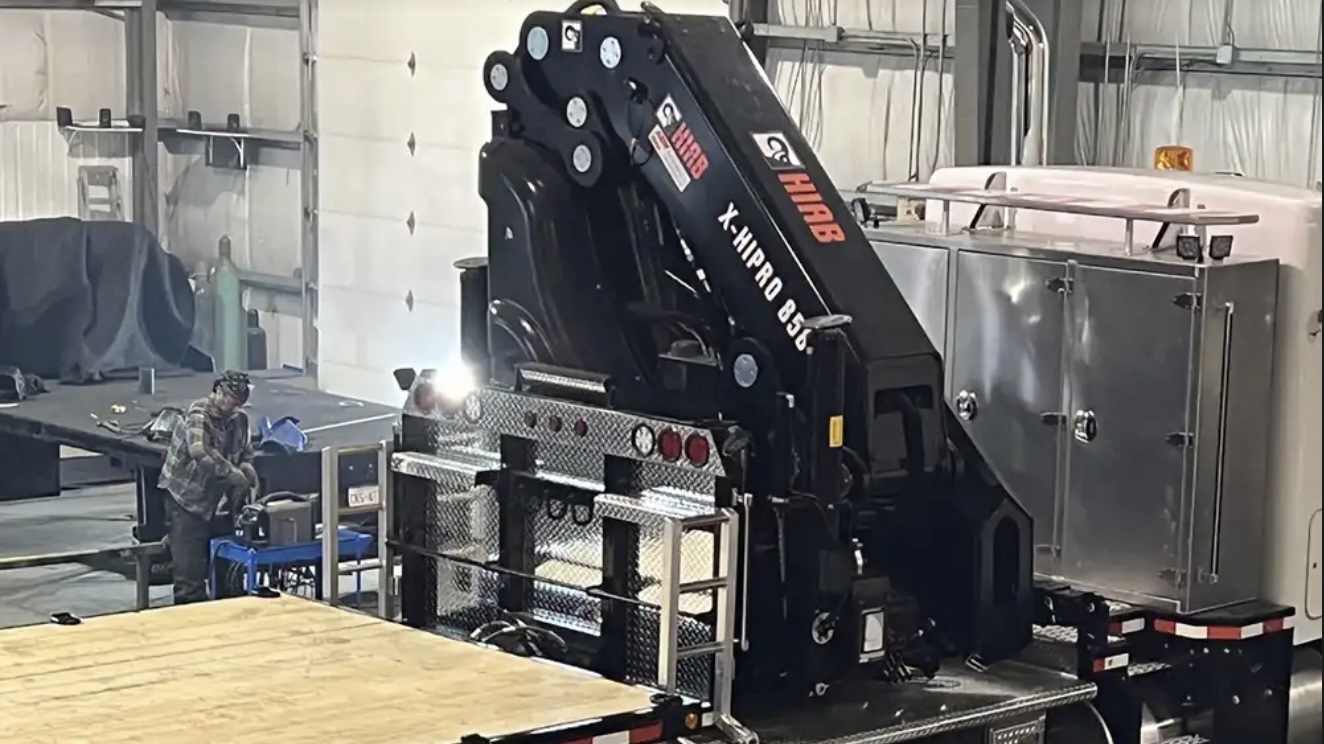
Most picker truck operators purchase their crane separately from a specialized crane supplier. The crane is then installed by a third party technician after the deck is fabricated.
This creates a coordination challenge: the deck must be designed to accommodate a crane that has not yet been installed.
The team at Core Fabrication addresses this challenge by preengineering the crane mounting points during the deck design phase.
Working With Crane Specifications
When a client orders a picker unit, we ask them to provide the specifications for their crane model. This includes the crane’s base dimensions, bolt patterns, weight and lifting capacity. We also need to know the crane’s center of gravity and how it will be positioned on the deck.
Using this information, we design mounting points that align precisely with the crane manufacturer’s specifications. This preengineering eliminates guesswork for the crane installer.
When the crane arrives, the mounting points will already be in place and ready for installation. The installer will not need to modify the deck or drill new holes, which could compromise the deck’s structural integrity.
Reinforcement for Lifting Capacity
Different crane models have different lifting capacities and generate different forces during operation. A crane rated for 10,000 pounds creates less stress on the deck than a crane rated for 30,000 pounds. That means mounting points must be engineered to handle the right amount of force without flexing or allowing movement.
We calculate the reinforcement required based on the crane’s maximum lifting capacity and the geometry of how loads will be positioned during typical operations. The mounting area may then receive additional cross bracing, thicker plate steel or reinforced welds as needed to create a rigid platform that will not shift under load.
Our integrated design process means these reinforcements also extend beyond the immediate mounting area. Each deck frame we design and fabricate is built to distribute crane loads across multiple structural members rather than concentrating stress at a single point. This approach prevents fatigue cracks and extends the operational life of the deck.
Hydraulic and Electrical Routing
Cranes require hydraulic lines and electrical connections to operate. These lines must be routed from the truck’s hydraulic system and battery to the crane mounting area without creating trip hazards or exposing the lines to damage.
We design routing paths for these lines during the deck fabrication process. Channels or tubes are built into the deck frame to protect hydraulic lines and electrical cables from being crushed by shifting loads or snagged during crane operation.
All connection points are positioned for easy access during crane installation. This allows the installer to complete the hookup efficiently without having to modify the deck or create improvised routing solutions that could fail when the crane is in service.
Coordination With Third Party Installers
One of the main reasons Core Fabrication uses a vertically integrated facility is to minimize the potential for losing details in translation when communicating with third parties. Our team handles as much of the design and fabrication process as possible ourselves. In situations where we must coordinate with third party installers, we make every effort to be clear and proactive. Our communication with crane installers for picker truck builds is a prime example of this approach in action.
Our team can contact crane installers directly to ensure our mounting points meet their requirements. In some cases, installers will actually visit our facility during the deck fabrication process to verify that mounting dimensions are correct and routing paths are adequate.
This coordination prevents costly delays and rework. It helps installers complete each job quickly so clients can put their trucks into service without unexpected downtime.
Common Client Priorities for Alberta Picker Builds
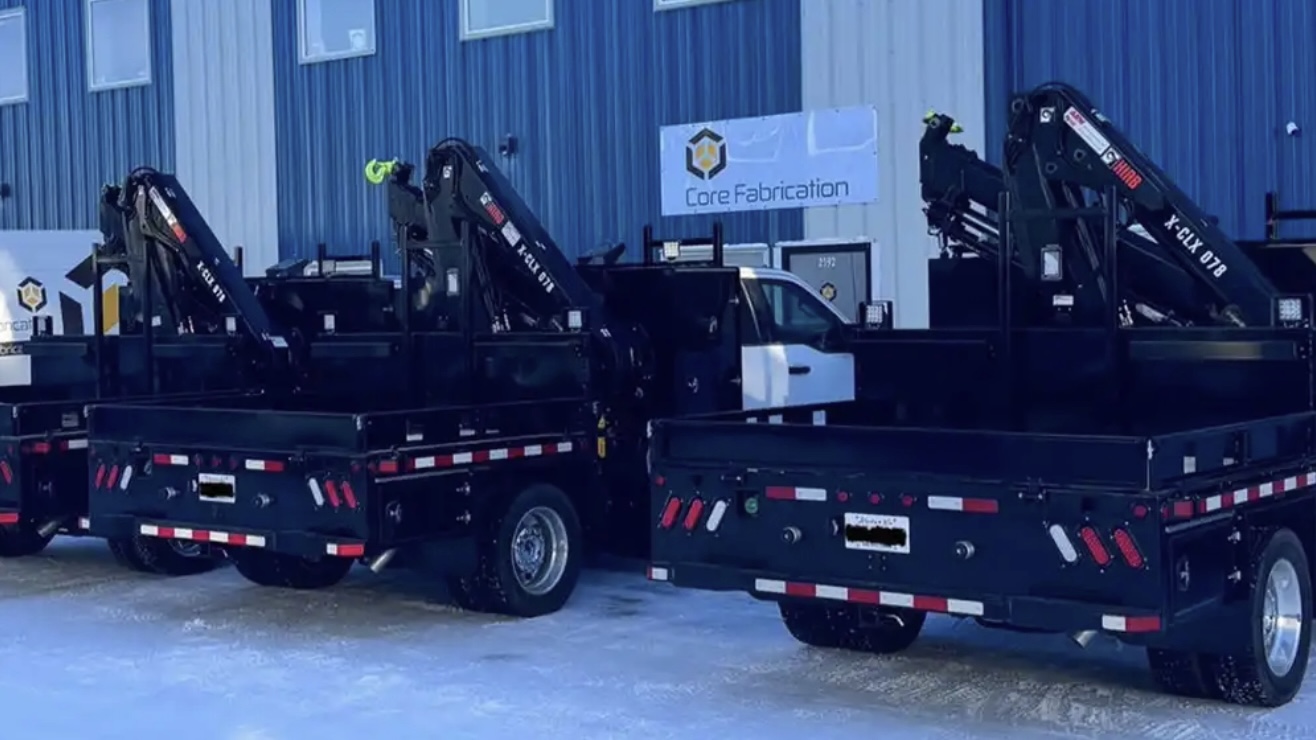
Based on our experience building picker units for Alberta oilfield operators, several priorities emerge consistently across different projects.
Clients Prioritize Reliable Long Term Performance Over Initial Cost Savings
When the chassis costs $150,000 or more and the crane adds another $50,000 to $100,000, operators want a deck engineered to last rather than a prefabricated option that will require replacement in three to five years.
Operators Require Storage that Matches Their Workflows
Storage layout must support each operator’s specific workflow. Toolboxes need to be accessible without climbing onto the deck. Chains, binders and rigging equipment require dedicated storage separate from hand tools. Secure compartments for high value items must be lockable.
Safety Features Are Not Optional
Safety features including stairs, handrails, anti slip surfaces and adequate lighting are essential for meeting regulatory requirements and protecting operators from falls during deck access and crane operation.
Deck Design Must Support Crane Performance
Crane performance depends on properly engineered mounting points that will not flex or develop stress fractures. Clients want confidence that the deck was designed for their specific crane model rather than adapted from a generic pattern.
All Decks Must Meet Compliance Standards
CMVSS compliance and National Safety Mark certification are expected on every build. Clients need a truck that is certified and ready for licensing without delays.
How Custom Fabrication Delivers Results Beyond Client Expectations
Core Fabrication starts every picker build by reviewing each client’s crane specifications and storage requirements. We supply detailed drawings for approval before fabrication begins. This collaborative approach ensures the final build matches the client’s operational needs.
Our vertically integrated facility handles the design and fabrication of each build under the same roof, from cutting steel to applying protective coatings. All welding is performed by Red Seal journeymen. All materials are selected for Alberta climate conditions. All designs are engineered to resist corrosion, manage water drainage and provide safe working surfaces year round.
The result is a picker unit built to perform as expected in the conditions operators encounter each day on Alberta jobsites.
If you are considering a picker truck build for Alberta oilfield work, contact Core Fabrication to discuss your requirements. Request a quote today and find out how custom fabrication delivers superior results compared to prefabricated alternatives.